Filipino culture is full of warmth, laughter, and a love for clever wordplay.
From the bustling streets of Manila to the cozy neighborhoods of Cebu, Filipinos have a knack for turning everyday words into puns that are as delightful as halo-halo on a hot day.
Whether you’re posting on Instagram, making friends laugh, or just enjoying a cheeky joke, these Filipino puns will brighten your day.
Let’s dive into the colorful world of Filipino humor—where “tuwid na daan” meets twisted wordplay!
Funny Filipino Puns Captions
Perfect for captions on your latest selfie, food post, or travel pic. These puns are short, witty, and made for scrolling thumbs.
- “Lumpia your heart and I’ll wrap it in love.”
- “Adobo you and me forever?”
- “You guava me crazy!”
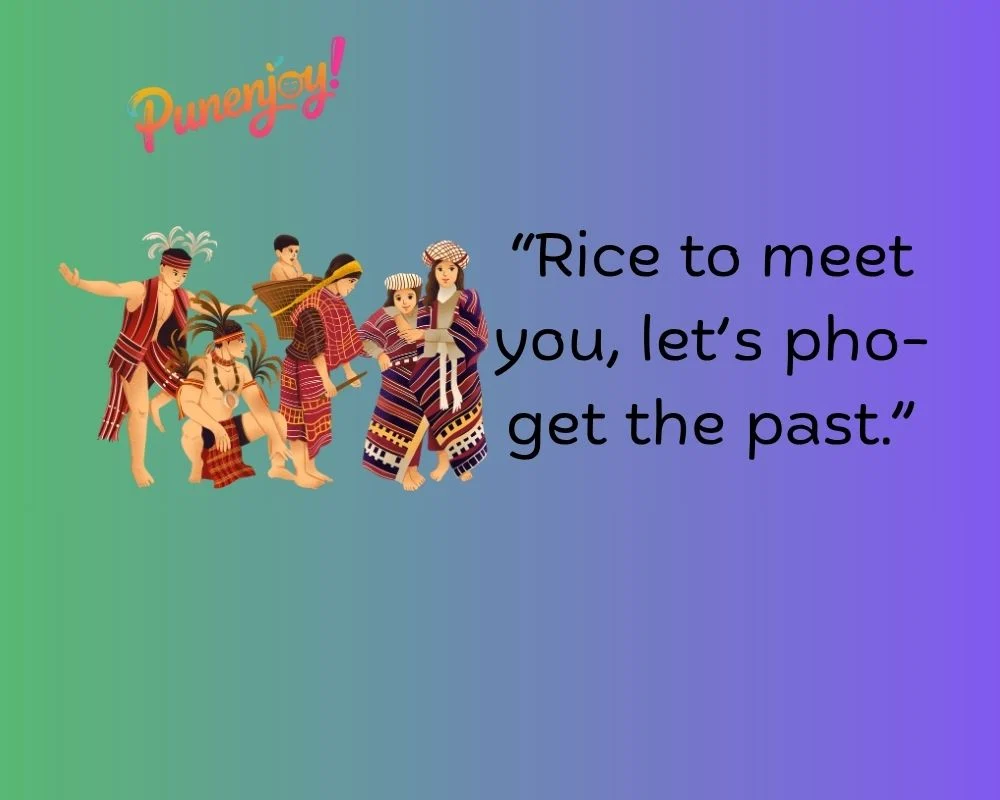
- “Rice to meet you, let’s pho-get the past.”
- “Sinigang you a smile today?”
- “Bana-na-na-na, you make me go loco!”
- “Pandesal-ly yours forever.”
- “Taho you later if you don’t text me back.”
- “I’m soy into you, really!”
- “Ube-lievable how much I love this dessert.”
- “Halo-halo, and I’m mixed up over you.”
- “You’re the calamansi to my day.”
- “Kare-kare my heart, I’m nuts about you.”
- “Don’t go Buko on me now.”
- “Let’s lumpia together and never split.”
Pro tip: Pair these with cute food pics for maximum engagement.
Clever Filipino Puns for Instagram
Instagram loves clever wordplay, and Filipinos have perfected it with a twist of humor. Here’s your next batch of shareable puns:
- “You’re pho-real my favorite person.”
- “I’m in a serious relationship with adobo.”
- “You make my heart go Bagoong!”
- “Life is more fun when you’re Sinigang with friends.”
- “Buko juice? More like Buko me up, Scotty!”
- “I’ve got a lechon of love for you.”
- “Puto together like peanut butter and jelly.”
- “Taro-tally obsessed with you.”
- “I’m ube-ting you smile today.”
- “You’re my mangga-nificent one.”
- “Let’s lumpia our way to happiness.”
- “You’re the halo-halo of my heart—mixed and sweet!”
- “Don’t go sinigang without me.”
- “I’m soy happy when you’re around.”
- “Bana-na-na, life’s better with you in it.”
Pro tip: Tag your friends, foodies, or travel buddies—it’s a guaranteed scroll-stopper.
Best Filipino-Themed Wordplay Jokes
These puns are perfect for jokes at gatherings, Zoom calls, or casual chats. They’re playful, family-friendly, and guaranteed to get a chuckle:
- Why did the mango break up with the pineapple? It found them too “a-peeling.”
- What’s a Filipino’s favorite type of music? Adobo beats!
- How do you know a coconut is happy? It’s totally Buko-larious.
- Why did the rice refuse to fight? It didn’t want to get into a sticky situation.
- What did the banana say to the ube? “You complete me.”
- How do Filipinos stay cool in the summer? With halo-halo therapy.
- Why did the fish join the party? It wanted to be sinigang-star!
- What did the garlic say to the chicken? “You’re clucking amazing!”
- Why do lechon lovers never feel lonely? They’re always surrounded by friends.
- How does pandesal greet its friends? “Roll with it!”
- Why did the adobo start a band? It had the perfect marinate-ry.
- What’s a Filipino vampire’s favorite dish? Banan-ana-na blood pudding.
- Why did the rice cooker become a motivational speaker? It wanted everyone to steam ahead.
- How do you make a Filipino salad laugh? Toss in some humor.
- What do you call a coconut that tells jokes? A Buko comedian.
Pro tip: These are great for family-friendly gatherings, school events, or even icebreakers.
Witty Filipino Puns for Social Media
Social media thrives on witty puns, and Filipinos have a knack for this. Use these on Facebook, Twitter, or TikTok for likes, laughs, and shares:
- “You make my heart skip a beat, like a lechon on a hot grill.”
- “Feeling ube-licious today!”
- “You’re my bagoong soulmate.”
- “Rice to see you again!”
- “Taho-lly in love with you.”
- “Let’s get mangga-nificent together.”
- “Adobo-lutely can’t resist you.”
- “Halo-halo my heart whenever you’re near.”
- “Pandesal-ly speaking, you’re the best.”
- “Ube-lieve it or not, I’m thinking of you.”
- “Don’t go buko-ing my bubble.”
- “You pho-rcibly made me fall for you.”
- “Life without you is un-bear-able, like missing leche flan.”
- “I’m sinigang over heels for you.”
- “You make my heart go lechon over!”
Pro tip: Short, punchy, and playful puns perform best for mobile scrolling.
Clean and Family-Friendly Filipino Jokes
Not all puns need to be Instagram-perfect. These are safe, wholesome, and fun for kids and adults alike:
- Why don’t adobo and sinigang ever argue? They always find common seasoning.
- What’s the coconut’s favorite movie? Buko Holmes: The Nutty Detective.
- Why did the banana go to school? To become a smart snack!
- How does halo-halo stay so cool? It chills out.
- What do you call a rice that tells stories? A grainiac.
- Why did the mango blush? It saw the ube dessert.
- What’s pandesal’s favorite game? Roll the dice!
- Why was the chicken dancing? Because it found a lechon beat.
- What did the garlic say during the talent show? “I’ll spice things up!”
- Why did the fish go to the market? It wanted to make a splash.
- How do you cheer up a sad coconut? Tell it a Buko joke!
- What’s the ube’s favorite hobby? Coloring outside the lines.
- Why did the rice refuse to swim? It didn’t want to be sticky.
- How do you make adobo laugh? Give it a saucy punchline.
- What’s the favorite Filipino fruit of a detective? Mango-licious clues!
Pro tip: Perfect for family game nights, school newsletters, or friendly group chats.
Why Filipinos Love Puns
Filipino humor is inherently playful, creative, and community-centered. Puns are more than jokes—they’re a way to bond, celebrate language, and enjoy everyday life. The beauty lies in their simplicity: turning ordinary words into something that sparks laughter and joy.
From food puns to cultural references, Filipino puns reflect the cheerful, lighthearted spirit that makes the Philippines—and its diaspora—so unique.
FAQs:
1. What are Filipino puns?
Filipino puns are humorous wordplays that mix English and Filipino languages, often using double meanings or cultural references.
2. Why are Filipino puns so popular?
They’re popular because they combine humor with relatable Filipino culture, making them fun for both locals and non-Filipinos.
3. What makes Filipino puns unique?
Their uniqueness comes from the Philippines’ multilingual culture, allowing creative wordplay across English, Tagalog, and regional languages.
4. Are Filipino puns easy to understand for non-Filipinos?
Yes—many Filipino puns are built on familiar English words, though some cultural jokes may need context.
5. Can I use Filipino puns for social media captions?
Absolutely! Filipino puns make fun and engaging captions for Instagram, Facebook, and TikTok.
6. What are some examples of simple Filipino puns?
Examples include: “I’m rice and shine!” or “You’re my a-dobo-table person.”
7. Are Filipino puns good for classroom activities?
Yes, teachers often use Filipino puns to make language lessons entertaining and interactive.
8. How can I create my own Filipino puns?
Combine Filipino and English words, listen for double meanings, and play with food names, places, or daily expressions.
9. Are Filipino puns culturally appropriate to use?
Yes—Filipino puns are generally wholesome and culturally appreciated as long as they’re used respectfully.
10. Where can I find more Filipino puns online?
You can find Filipino puns on social media pages, humor sites, Filipino meme communities, and blogs dedicated to wordplay.
Final Thoughts:
Whether you’re posting a selfie, sharing with friends, or trying to brighten someone’s day, Filipino puns are your secret weapon.
They’re witty, charming, and often downright irresistible.
So, next time you enjoy adobo, halo-halo, or even a simple pandesal, think of a pun and share the laughter.
Which Filipino pun made you laugh the most? Comment below and let’s spread the joy—one pun at a time!

Saba Ali is the author and founder of Punenjoy, a humor-focused platform dedicated to creative puns and entertaining wordplay. Through engaging content and a playful writing style, Saba aims to spread positivity and laughter—one pun at a time.