Language constantly evolves, and certain words gain popularity because they perfectly capture emotions that people experience every day.
One such word is “enamored.” Many people search for the enamored meaning when they encounter it in books, movies, social media posts, or romantic conversations. It’s a word often associated with love, admiration, and deep affection.
Understanding the meaning of this term can help you better interpret messages, literature, and conversations.
Whether someone says they are enamored with a person, an idea, or even a hobby, the word expresses strong feelings of attraction or admiration.
People search for the meaning of “enamored” because they want clarity about how and when to use it correctly. Is it only romantic? Can it describe admiration for things or activities? Is it appropriate in professional writing?
Definition & Meaning
The word “enamored” generally describes a strong feeling of affection, admiration, or attraction toward someone or something. When a person is enamored, they often feel deeply fascinated or emotionally drawn to the subject of their affection.
At its core, the term implies emotional intensity. It usually suggests that someone feels captivated or charmed. In many situations, it refers to romantic interest, but it can also describe admiration for ideas, talents, or objects.
For example:
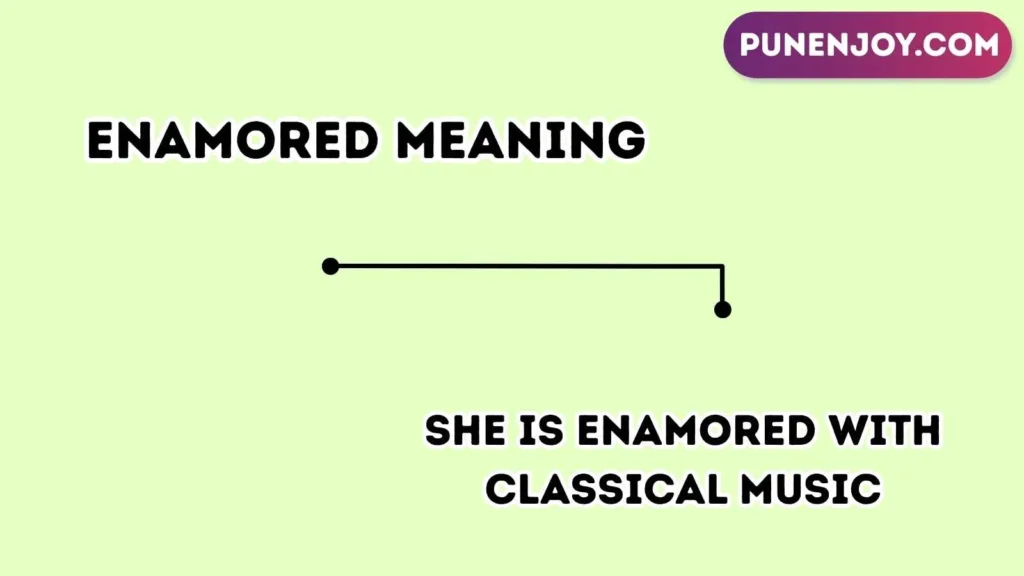
- “She is enamored with classical music.”
- “He seems enamored with his new colleague.”
- “The audience was enamored by the actor’s performance.”
In each case, the word highlights a powerful sense of appreciation or attraction.
Another key element of the word is emotional focus. When someone is enamored, their attention often centers on the person or thing they admire. They may talk about it frequently, think about it often, or show excitement whenever it is mentioned.
Unlike stronger terms such as “obsessed,” being enamored does not necessarily imply unhealthy behavior. Instead, it typically reflects admiration mixed with affection or fascination.
In everyday conversation, the word adds a slightly poetic or expressive tone. It is more descriptive than simply saying “like” or “love,” which is why writers and speakers often choose it to convey deeper emotion.
Overall, the term describes a positive emotional state where admiration, fascination, and affection come together.
Background & History
The origins of the word “enamored” can be traced back several centuries. It comes from the older verb “enamor,” which itself developed from the French word enamourer. That French term meant “to inspire love” or “to cause someone to fall in love.”
Going even further back, its roots connect to the Latin word “amor,” meaning love. This connection explains why the word is strongly associated with affection and romantic attraction.
During the Middle Ages, variations of this word appeared in literature and poetry describing romantic devotion. Writers used it to depict characters who were deeply charmed or captivated by someone they admired.
By the 17th and 18th centuries, the word became common in English literature. Authors used it not only to describe romantic love but also admiration for beauty, art, or ideas. Its poetic quality made it particularly popular in storytelling and romantic narratives.
Over time, everyday language simplified many expressions of love, replacing formal or literary terms with casual ones like “like” or “crush.” However, “enamored” never completely disappeared. Instead, it retained its reputation as a more elegant and expressive way to describe admiration.
Today, the word still appears in novels, journalism, social media captions, and conversations about relationships. Although it may sound slightly formal, it remains widely understood and appreciated for its emotional depth.
Its historical journey—from Latin roots to modern English—illustrates how language carries emotional concepts across generations.
Usage in Various Contexts
The word “enamored” appears in many different situations, not just romantic relationships. Its flexibility allows it to describe admiration in a variety of contexts.
Romantic Relationships
In romantic situations, being enamored usually means feeling strongly attracted to someone. It often refers to the early stages of love when emotions feel exciting and intense.
Example:
“After a few dates, he was clearly enamored with her.”
Admiration for Talents or Achievements
The term can also describe admiration for someone’s abilities or accomplishments.
Example:
“The fans were enamored with the singer’s powerful voice.”
Appreciation of Ideas or Interests
People sometimes use the word to express fascination with hobbies, technology, or concepts.
Example:
“She became enamored with photography during her travels.”
Entertainment and Media
Journalists and critics frequently use the term to describe how audiences react to performers or creative work.
Example:
“Viewers were instantly enamored with the show’s main character.”
In all these cases, the word expresses admiration that goes beyond simple liking. It emphasizes emotional engagement and fascination.
Common Misconceptions & Clarifications
Many people misunderstand the meaning of “enamored” because it is commonly associated only with romantic love.
One misconception is that it must involve a romantic relationship. In reality, the term can refer to admiration for almost anything—people, hobbies, art, or ideas.
Another misunderstanding is that it implies obsession. While it does indicate strong interest, it usually carries a positive and healthy tone rather than an unhealthy fixation.
Some people also think the word sounds overly dramatic or outdated. However, modern writers and speakers still use it because it communicates emotion more vividly than simpler words.
Clarifying these misconceptions helps people use the word more confidently in everyday communication.
Similar Terms & Alternatives
Several other words express similar emotions, although each has slightly different nuances.
Common alternatives include:
Adore – suggests deep love or respect.
Admire – expresses appreciation or respect.
Fascinated – highlights strong curiosity or interest.
Infatuated – describes intense but sometimes temporary romantic attraction.
Captivated – emphasizes being strongly attracted or charmed.
Choosing the right word depends on the situation. “Enamored” sits between admiration and romantic affection, making it versatile.
How to Respond to This Term
If someone says they are enamored with you or something related to you, your response depends on context.
In romantic situations, the statement often expresses affection or admiration. A warm response acknowledging the feeling may be appropriate if the emotion is mutual.
Example responses:
- “That’s really kind of you to say.”
- “I’m glad you feel that way.”
In non-romantic contexts, such as admiration for work or talent, responding with appreciation works well.
Example:
“Thank you, that means a lot.”
Understanding the context helps determine whether the word expresses love, admiration, or simple enthusiasm.
Regional or Cultural Differences
The meaning of “enamored” is generally consistent across English-speaking regions, but usage frequency varies.
In the United States and the United Kingdom, the word often appears in literature, journalism, and formal writing. In casual speech, people may prefer simpler terms like “really like” or “love.”
In academic or professional contexts, writers sometimes use it to add descriptive depth when discussing admiration or fascination.
In cultures where English is a second language, the word may appear less frequently in conversation but remains common in written English.
Despite these differences, its core meaning remains universally understood among English speakers.
Comparison with Similar Terms
Although “enamored” overlaps with other emotional terms, subtle differences exist.
Enamored vs Infatuated
Infatuation usually refers to intense but short-lived attraction. Being enamored can last longer and may include admiration beyond physical attraction.
Enamored vs Love
Love represents a deeper, long-term emotional bond, while being enamored may describe the early stages of attraction or admiration.
Enamored vs Fascinated
Fascination focuses more on curiosity or interest rather than emotional affection.
Understanding these distinctions helps writers and speakers express emotions more accurately.
Usage in Online Communities & Dating Apps
In modern digital culture, the word occasionally appears in dating profiles, captions, and messages.
For example, someone might write:
“I’m enamored with travel and good coffee.”
This usage signals strong enthusiasm for certain interests. On dating apps, it can also describe romantic attraction or admiration for someone’s personality or appearance.
Because the word carries a slightly poetic tone, people sometimes use it to sound expressive or thoughtful in their profiles.
Hidden or Offensive Meanings
Generally, “enamored” does not carry offensive or inappropriate meanings. It is considered a positive and respectful term.
However, context still matters. If someone uses the word excessively or insincerely, it might sound exaggerated or dramatic. In rare cases, it could also appear sarcastic.
Still, unlike many slang expressions, the term itself is neutral and widely accepted.
Suitability for Professional Communication
The word “enamored” can appear in professional writing, but it should be used carefully.
In formal reports or business communication, simpler language often works better. However, it can be appropriate in articles, essays, or creative writing.
For example:
“The audience became enamored with the brand’s innovative design.”
When used sparingly, it adds elegance without sounding unprofessional.
FAQs:
What does enamored mean?
It means feeling strong admiration, affection, or attraction toward someone or something.
Is being enamored the same as being in love?
Not exactly. It often describes strong attraction or admiration, which may or may not develop into love.
Can enamored describe things instead of people?
Yes. People can be enamored with hobbies, ideas, art, or activities.
Is enamored a positive word?
Yes. It usually expresses admiration, fascination, or affection in a positive way.
Is the word formal or casual?
It is slightly formal but still commonly used in modern writing and conversation.
Can enamored be used in professional writing?
Yes, but it should be used sparingly and mainly in descriptive contexts.
Conclusion:
Understanding the enamored meaning helps people interpret emotional language more clearly. The word describes a powerful sense of admiration, fascination, or attraction toward someone or something. With roots in centuries-old language traditions, it has remained relevant because it captures feelings that simple words sometimes fail to express.
Today, the term appears in literature, everyday conversations, online communities, and even dating profiles. Although it often relates to romantic interest, it can also describe admiration for talents, hobbies, ideas, or creative work.
By recognizing how the word is used across different contexts, readers and writers can communicate emotions more precisely. Whether describing a captivating person, a favorite activity, or inspiring art, “enamored” remains a vivid way to express heartfelt appreciation.

Sergey Sokolov specializes in writing about meaning, definitions, and conceptual understanding. His work aims to break down ideas into simple explanations, helping readers grasp not just what something means, but why it matters. Sergey’s writing combines clarity, logic, and insight.