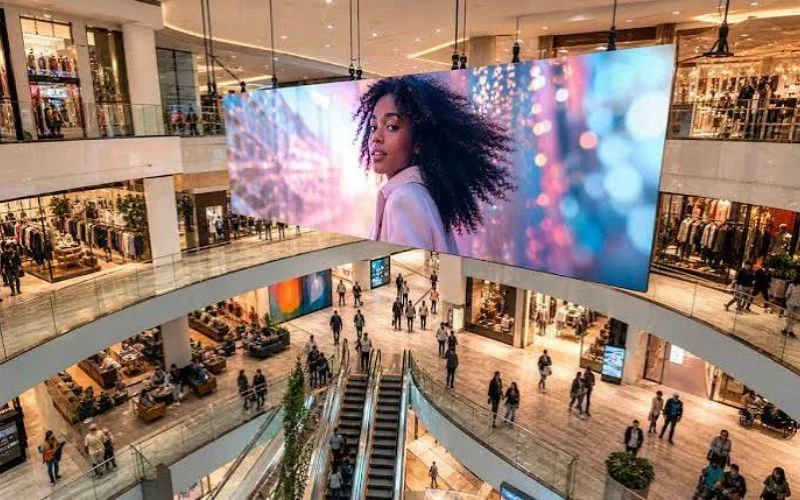
Shopping malls and hotels often have display locations that serve traffic from more than one direction. A single-faced screen can look impressive from the front and nearly useless from behind. Double-sided LED video wall panels solve that problem in the right spaces, but they should be chosen for a real circulation need, not just because they look unusual.
Where Double-Sided Displays Make Sense
The best use cases are places where people approach from opposite directions. Mall corridors, atrium walkways, hotel lobbies, convention center entrances, airport retail zones, and elevator banks can all benefit from a display that communicates both ways. In these environments, the screen becomes a sign, media surface, and architectural object at the same time.
Digital Signage Federation discussions often emphasize that signage effectiveness depends on audience, location, dwell time, and content relevance. That logic applies strongly to double-sided displays. If the back side has no meaningful audience, the added complexity may not be justified. If both sides face steady traffic, the format can make better use of a valuable location.
Product pages such as the BIM Plus-T/TX double-sided LED display are useful references for understanding how this category fits indoor commercial environments.
The format can also reduce visual clutter. Instead of mounting separate displays on opposite walls or adding freestanding signs into a walkway, a single central feature may serve both traffic flows when the structure and content plan support it.
Content Should Not Simply Be Mirrored
Many teams assume both sides of a display should show the same loop. Sometimes that works, especially for general branding. But shopping malls and hotels often have different audience needs on each side. One side may face arriving guests, while the other faces people leaving. One side may promote a restaurant, while the other supports wayfinding or an event schedule.
This is where content strategy matters. LED video wall panels are flexible, but a double-sided installation only reaches its potential when each face has a clear job. The display should support the path people are already taking. In a hotel, that may mean welcome content near the entrance and meeting information near the ballroom side. In a mall, it may mean campaign media on one side and directional support on the other.
Pixel pitch, the distance between neighboring LED pixels, should be selected based on viewing distance. Corridors and lobbies can bring people close to the display, so legibility should be tested from common approach angles. Brightness in nits should also be tuned for indoor comfort, especially in hospitality settings where a screen should not feel harsh.
Design, Service, and Placement
Double-sided screens are more visible as objects than wall-mounted displays. Edges, cabinet depth, cable routing, suspension, and base design all affect the finished look. In a hotel lobby or upscale mall, the display should feel intentional from every side, including when viewed up close.
Service access is another important issue. A double-sided display may be placed in a high-traffic area where closures are inconvenient. Facility teams should understand how modules, power, and signal components can be reached without disrupting guests or shoppers. Heat management and structural planning also deserve attention because the screen is not hidden against a back wall.
For commercial interiors, Esdlumen’sdouble-sided indoor LED screen page can serve as a starting point for conversations among architects, AV integrators, and property teams. The right installation is not just a display purchase; it is a circulation and content decision.
Double-sided LED panels are worth considering when a location naturally has meaningful traffic on both sides. When paired with thoughtful placement, readable content, and a clean service plan, they can turn a busy passage into a useful visual touchpoint without adding another fixture to the floor.

Alien Mark is a humor-loving wordplay enthusiast and the creative mind behind PunEnjoy.com. With a passion for clever puns, jokes, and lighthearted laughs, Alien Mark crafts fun, family-friendly content that brings smiles to readers around the world. From witty one-liners to themed pun collections, his mission is simple: turn everyday words into extraordinary laughter.