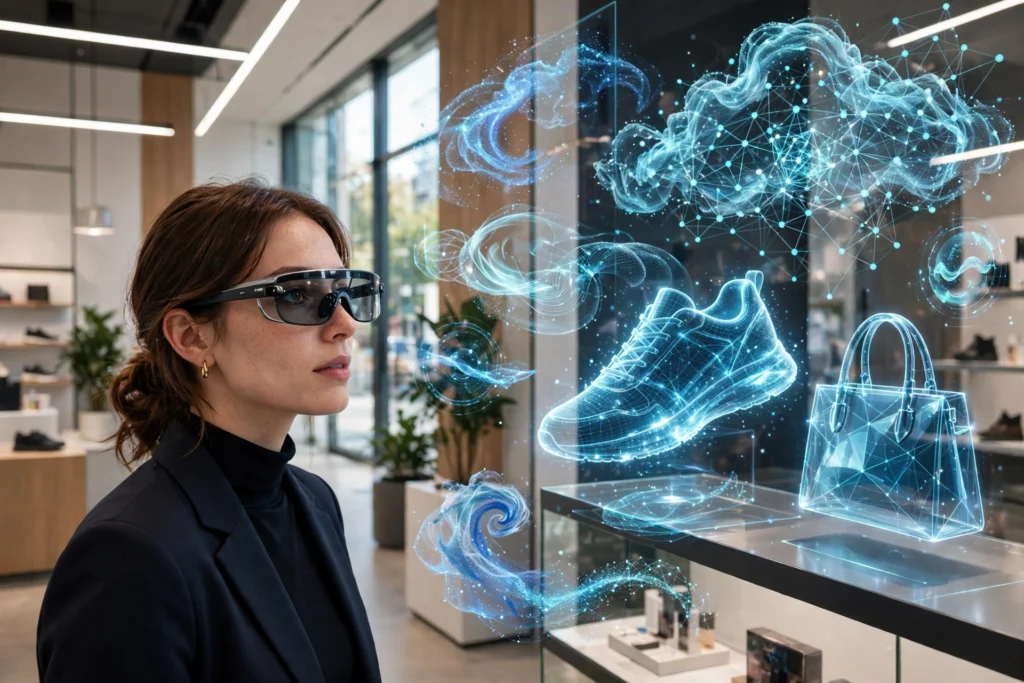
AR apps and generative AI are reshaping how businesses engage customers. Augmented reality has moved well beyond novelty filters and games. Retailers let shoppers preview furniture in their living rooms, manufacturers guide technicians through repairs with on-screen overlays, and educators bring complex subjects to life in three dimensions. As devices become more capable, businesses are discovering that immersive experiences can shorten decisions, reduce errors, and make brands far more memorable.
For companies ready to explore this space, partnering with an experienced AR application development company can turn an ambitious concept into a stable, user-friendly product. From 3D modeling and spatial tracking to performance tuning across devices, the right team handles the technical details so you can focus on the experience your audience will see.
Alongside immersive technology, generative AI is opening new creative and operational possibilities. Seeking professional generative AI consulting helps leaders identify where these tools can add real value, set realistic goals, and avoid costly experiments that never reach production.
Why AR Is Gaining Momentum
Smartphones, tablets, and headsets now ship with the sensors and processing power AR needs. That has lowered the barrier for both businesses and users.
- Better purchase confidence: Customers who can visualize a product in their own space tend to hesitate less and return fewer items.
- Stronger engagement: Interactive experiences hold attention longer than static images or video.
- Faster training: Step-by-step overlays help employees learn procedures with fewer mistakes.
- Remote assistance: Experts can guide on-site staff through tasks from anywhere.
- Memorable marketing: Branded AR campaigns encourage sharing and word of mouth.
Industries Putting AR to Work
- Retail and e-commerce: Virtual try-on for clothing, eyewear, and cosmetics, plus room-scale furniture previews.
- Real estate and interior design: Virtual staging and walkthroughs before construction or renovation begins.
- Manufacturing and field service: Guided assembly, maintenance instructions, and equipment diagnostics.
- Healthcare and education: Anatomy visualization, procedure training, and interactive learning modules.
- Tourism and events: Interactive tours, wayfinding, and location-based storytelling.
Where AR Apps and Generative AI Add Value
Generative AI can enhance AR products and broader business operations in several practical ways:
- 3D asset creation: Speeding up the production of models, textures, and environments.
- Conversational guides: Virtual assistants inside an AR experience that answer questions in natural language.
- Personalized content: Tailoring visuals, descriptions, and recommendations to each user.
- Marketing and documentation: Drafting copy, product descriptions, and training materials faster.
- Internal knowledge tools: Helping teams search and summarize company information.
The best results come from starting with a clear problem rather than a trending tool. Consulting early can help you weigh costs, data requirements, privacy concerns, and accuracy risks before you commit.
Key Considerations Before You Build
A few practical questions can save time and budget:
- What problem does AR solve? If the experience doesn’t improve a decision or task, it risks becoming a gimmick.
- Which devices will your audience use? Phones, tablets, and headsets each have different capabilities.
- How will you handle performance? Smooth tracking and fast loading are essential for a good experience.
- What are your content needs? High-quality 3D assets often take more effort than the app code itself.
- How will you measure success? Define metrics such as conversion rates, session length, or training time saved.
Choosing the Right Development Partner
When evaluating teams, look for:
- Relevant AR projects with working demos or case studies
- Experience with frameworks such as ARKit, ARCore, Unity, and WebAR
- Clear approaches to security, privacy, and responsible AI use
- Transparent timelines, milestones, and communication
- Post-launch support for updates, new devices, and OS changes
Start Small, Then Scale
Ambitious AR projects can become expensive when they try to do everything at once. A focused pilot, such as a single product visualizer or one training module, lets you test real user reactions and gather data before investing further.
Generative AI benefits from the same approach. Pick one use case, measure the results, and expand as your team gains confidence and the value becomes clear.
Final Thoughts
AR apps and generative AI are both maturing quickly, and businesses that experiment thoughtfully will be better prepared for what comes next. The goal is not to chase every trend but to use these tools where they genuinely improve the customer or employee experience.
If you are considering an AR project or want clarity on how generative AI fits your strategy, define your objectives, choose partners with proven expertise, and build in stages.